
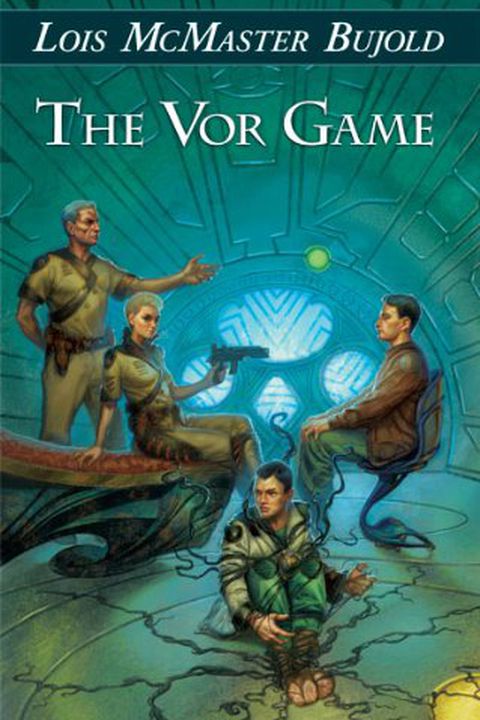
The Vor Game
by Lois McMaster Bujold
Reading Profile
Should I read this?
Bright, energetic space-opera that keeps momentum by alternating small-scale capers with larger political stakes. What works best is pleasurable propulsion: clever set pieces, brisk banter, and puzzles that reward attention. The main limitation is tone and depth unevenness—comic mishaps and fast plotting can shortchange emotional payoff and make some political passages feel procedural. Best enjoyed for entertainment and clever plotting rather than philosophical depth or long-form character study.
Read this if...
- •A software engineer commuting 30–60 minutes each way who wants to finish a mini-arc per ride—chapters land like episodes, so you can make steady progress without needing a long uninterrupted stretch.
- •A tabletop RPG game master building a short campaign centered on heists and political maneuvering—useful now as a source of encounter beats, roguish NPC templates, and episodic pacing you can adapt to a few weekly sessions.
- •A mid-level marketing associate decompressing after long shifts who wants light, witty escapism rather than heavy emotional investment—good when you need something entertaining that won’t demand deep focus or emotional processing.
Skip this if...
- •You who want contemplative, slow-burn SF—this keeps moving and rarely lingers on interior psychology.
- •You who dislike tonal whiplash—you'll likely put it down when the novel shifts from light comic capers into long sections of procedural political maneuvering that slow the pace.
- •You who need evenly developed secondary characters—supporting cast can feel like set dressing rather than fully rounded figures, which frustrates readers wanting ensemble depth.
Hugo Award Winner! Miles Vorkosigan graduates from the Academy, joins a mutiny, is placed under house arrest, goes on a secret mission, reconnects with his loyal Dendarii Mercenaries, rescues his Emperor, and thwarts an interstellar war. Situation normal, if you're Miles....
Before You Buy
Reading Specifications
Difficulty:easy
Audience Fit
- A software engineer commuting 30–60 minutes each way who wants to finish a mini-arc per ride—chapters land like episodes, so you can make steady progress without needing a long uninterrupted stretch.
- A tabletop RPG game master building a short campaign centered on heists and political maneuvering—useful now as a source of encounter beats, roguish NPC templates, and episodic pacing you can adapt to a few weekly sessions.
- A mid-level marketing associate decompressing after long shifts who wants light, witty escapism rather than heavy emotional investment—good when you need something entertaining that won’t demand deep focus or emotional processing.
- You who want contemplative, slow-burn SF—this keeps moving and rarely lingers on interior psychology.
- You who dislike tonal whiplash—you'll likely put it down when the novel shifts from light comic capers into long sections of procedural political maneuvering that slow the pace.
- You who need evenly developed secondary characters—supporting cast can feel like set dressing rather than fully rounded figures, which frustrates readers wanting ensemble depth.
Check formats, pricing, and availability options for Kindle, physical print, or audiobooks directly.
View available editions on AmazonKey themes
Why recommended
appears in Space Opera, Science Fiction, and Science.
Recommendation Signals
Recommendation proof is sourced from public posts, interviews, reading lists, and cited references.
No verified recommendation proof available yet.
Appears In

Not sure if this is the right fit?
Consider Leviathan Wakes by James S. A. Corey. Recommended by 3 sources.
“Leviathan Wakes reads like a brisk, cinematic space-opera that shifts between a small-crew survival story and a widening conspiracy with real political consequences. Its strengths are propulsive plotting, street-level detail of life across Mars, the Belt and Earth, and a cast that grounds big-idea threats in personal stakes. Limitations: an abrupt tonal late-book escalation that favors spectacle over subtlety, and some exposition-heavy stretches that will frustrate readers wanting quieter character study or tighter hard-SF rigor.”
Similar books
How recommendation signals are reviewed
Each recommendation is collected from a public source — interviews, articles, or curated lists — and linked to its original URL. Books with many verifiable recommendations from respected people rank higher.