
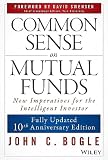
Common Sense on Mutual Funds
Fully Updated 10th Anniversary Edition
by John C. Bogle

4 more
More Recommenders
“A book that I read when I was very young that I thought really kind of explained the investing world in plain English. | Cogent, honest, and hardhitting. A must read for every investor. | Read any book by John C. Bogle, the founder of Vangard.”
Source →“A book that I read when I was very young that I thought really kind of explained the investing world in plain English. | Cogent, honest, and hardhitting. A must read for every investor. | Read any book by John C. Bogle, the founder of Vangard.”
Source →“A book that I read when I was very young that I thought really kind of explained the investing world in plain English. | Cogent, honest, and hardhitting. A must read for every investor. | Read any book by John C. Bogle, the founder of Vangard.”
Source →“A book that I read when I was very young that I thought really kind of explained the investing world in plain English. | Cogent, honest, and hardhitting. A must read for every investor. | Read any book by John C. Bogle, the founder of Vangard.”
Source →Recommended by 6 notable people, including Warren Buffett and Money Mustache
Check price on AmazonProof-backed recommendation
Amazon availability
Reading Profile
Should I read this?
John C. Bogle writes in direct, opinionated prose arguing that low costs, low turnover, and index exposure are central to mutual-fund investing success. The clearest value is the repeated, practical attention to expense ratios, turnover, and tax drag — readers leave better able to judge fund fees and marketing claims. Frustrations include frequent repetition and long historical critiques of the mutual-fund industry that slow momentum. It supplies argument and conviction more than step-by-step portfolio worksheets; no exercises are provided.
Read this if...
- •a mid-career employee rebalancing a 401(k) after a promotion who needs concrete reasons to favor low-cost funds — because it lays out how fees and turnover chip away at returns and gives language to justify low-fee choices in plan lineups
- •a junior financial advisor at a small firm preparing for client meetings where clients hold high-fee active funds — because it provides plain-language talking points and historical examples to make the cost case to skeptical clients
- •a DIY investor deciding whether to replace active mutual funds with index funds in a taxable account who wants straightforward heuristics — because the book highlights expense ratios, turnover, and tax drag as simple decision criteria to weigh now
Skip this if...
- •annoying if you prefer bite-sized, tradeable steps or copy‑paste checklists — the book argues and chronicles rather than offering templates, step-by-step plans, or hands-on exercises
- •you'll likely put it down around the book's middle when the same cost-versus-performance point is restated across chapters and long industry-history passages accumulate into polemic
- •lose interest if you want quantitative models, factor-timing tactics, or short-term trading rules — this favors buy-and-hold, fee-first guidance rather than backtests or timing systems
John C. Bogle shares his extensive insights on investing in mutual funds Since the first edition of Common Sense on Mutual Funds was published in 1999, much has changed, and no one is more aware of this than mutual fund pioneer John Bogle. Now, in this completely updated Second Edition, Bogle returns to take another critical look at the mutual fund...
Before You Buy
Reading Specifications
Difficulty:easy
Audience Fit
- a mid-career employee rebalancing a 401(k) after a promotion who needs concrete reasons to favor low-cost funds — because it lays out how fees and turnover chip away at returns and gives language to justify low-fee choices in plan lineups
- a junior financial advisor at a small firm preparing for client meetings where clients hold high-fee active funds — because it provides plain-language talking points and historical examples to make the cost case to skeptical clients
- a DIY investor deciding whether to replace active mutual funds with index funds in a taxable account who wants straightforward heuristics — because the book highlights expense ratios, turnover, and tax drag as simple decision criteria to weigh now
- annoying if you prefer bite-sized, tradeable steps or copy‑paste checklists — the book argues and chronicles rather than offering templates, step-by-step plans, or hands-on exercises
- you'll likely put it down around the book's middle when the same cost-versus-performance point is restated across chapters and long industry-history passages accumulate into polemic
- lose interest if you want quantitative models, factor-timing tactics, or short-term trading rules — this favors buy-and-hold, fee-first guidance rather than backtests or timing systems
Check formats, pricing, and availability options for Kindle, physical print, or audiobooks directly.
View available editions on AmazonKey themes
Why recommended
Recommended by 8 sources and appears in Mutual Funds, Best Investing Books, and Books Recommended by Warren Buffett.
Recommended by notable people
People and public figures who have recommended this book.
Recommendation Signals
Recommendation proof is sourced from public posts, interviews, reading lists, and cited references.
Jason Zweig
“A book that I read when I was very young that I thought really kind of explained the investing world in plain English. | Cogent, honest, and hardhitting. A must read for every investor. | Read any book by John C. Bogle, the founder of Vangard.”
View sources (3) ▾80%
Appears In
Not sure if this is the right fit?
Consider The Intelligent Investor by Benjamin Graham. Recommended by 23 sources.
“This is a slow, meticulous read that builds value investing principles through exhaustive stock comparisons and portfolio theory. The core useful insight is Graham’s emphasis on a margin of safety and treating market fluctuations as your servant, not your guide. The limitation: many examples hail from the 1940s-1970s, making the data feel irrelevant, and the prose can be pedantic, stretching patience. You'll get the timeless philosophy but must wade through antiquated case studies.”
Similar books
The Little Book of Common Sense Investing
John C. BogleThe Intelligent Investor
Benjamin GrahamThe Undoing Project
Michael Lewis
Stress Test
Timothy F. Geithner
The Clash of the Cultures
John C. Bogle
The General Theory of Employment, Interest, and Money
John Maynard Keynes
Bull
Maggie Mahar
Financial Shenanigans
Howard SchilitHow recommendation signals are reviewed
Each recommendation is collected from a public source — interviews, articles, or curated lists — and linked to its original URL. Books with many verifiable recommendations from respected people rank higher.