
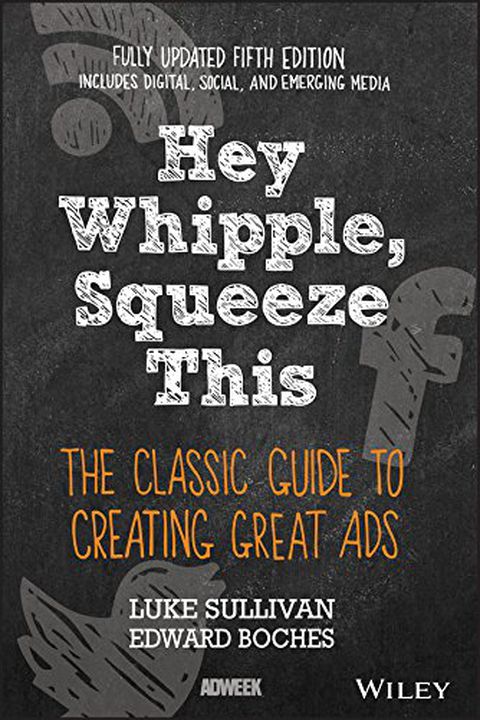
Hey, Whipple, Squeeze This
The Classic Guide to Creating Great Ads
by Luke Sullivan
Reading Profile
Should I read this?
Luke Sullivan writes in a conversational, often funny voice that pulls examples, ad copy snippets, and client war stories into quick lessons on headlines, pitching, and writer–art director collaboration. The most useful material is the practical language and format-aware tips you can borrow for briefs and pitches across print, TV, and social. Limitation: Sullivan leans on anecdote and opinion, so readers seeking tightly structured practice, step-by-step drills, or heavily cited theory will find the book lightweight and occasionally repetitive.
Read this if...
- •junior copywriter at an agency trying to learn how to craft punchy headlines and survive client pitches — gives concrete lines, pitch tactics, and example briefs you can imitate on the job.
- •creative director in a small shop shifting campaigns from print to social formats — provides discussion points and format-aware examples to help translate ideas between media.
- •marketing manager who hires or briefs agencies and wants to speak creative language — supplies plain-language checkpoints and questions to judge whether an idea will work in production.
Skip this if...
- •You'll likely put it down when the anecdote count rises and the same lesson is repeated as another war story — the middle sections can feel like diminishing returns.
- •Annoying if you prefer dense, citation-heavy argument or academic rigor — the book prioritizes practitioner opinion and voice over scholarly evidence.
- •Frustrating if you want structured training or practice drills — it lacks hands-on exercises, templates, or step-by-step workshops to train technique.
The classic guide to creating great advertising now covers all media: Digital, Social, and Traditional Hey Whipple, Squeeze This has helped generations of young creatives make their mark in the field. From starting out and getting work, to building successful campaigns, you gain a realworld perspective on what it means to be great in a fastmoving...
Before You Buy
Reading Specifications
Difficulty:hard
Audience Fit
- junior copywriter at an agency trying to learn how to craft punchy headlines and survive client pitches — gives concrete lines, pitch tactics, and example briefs you can imitate on the job.
- creative director in a small shop shifting campaigns from print to social formats — provides discussion points and format-aware examples to help translate ideas between media.
- marketing manager who hires or briefs agencies and wants to speak creative language — supplies plain-language checkpoints and questions to judge whether an idea will work in production.
- You'll likely put it down when the anecdote count rises and the same lesson is repeated as another war story — the middle sections can feel like diminishing returns.
- Annoying if you prefer dense, citation-heavy argument or academic rigor — the book prioritizes practitioner opinion and voice over scholarly evidence.
- Frustrating if you want structured training or practice drills — it lacks hands-on exercises, templates, or step-by-step workshops to train technique.
Check formats, pricing, and availability options for Kindle, physical print, or audiobooks directly.
View available editions on AmazonKey themes
Why recommended
appears in Advertising, Marketing, and Writing.
Recommendation Signals
Recommendation proof is sourced from public posts, interviews, reading lists, and cited references.
No verified recommendation proof available yet.
Appears In
Not sure if this is the right fit?
Consider Give and Take by Adam Grant. Recommended by 34 sources.
“A research-heavy exploration of how reciprocity styles—givers, takers, and matchers—shape professional success. Grant uses stories from business, sports, and entertainment to argue that selfless givers can rise to the top if they avoid burnout and exploitation. The book is densely packed with studies, which makes it convincing but sometimes overwhelming. Useful for understanding networking through a generous lens, though the sheer volume of examples may feel like a barrage. Annoying if you want fewer anecdotes and more actionable steps.”
Similar books
How recommendation signals are reviewed
Each recommendation is collected from a public source — interviews, articles, or curated lists — and linked to its original URL. Books with many verifiable recommendations from respected people rank higher.