
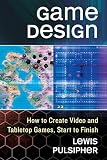
Game Design
How to Create Video and Tabletop Games, Start to Finish
by Lewis Pulsipher
Reading Profile
Should I read this?
Plainspoken and practical, Game Design rejects the myth that a single 'big idea' is enough and foregrounds process: prototyping, iteration, and disciplined playtesting. It favors step-by-step guidance for turning concepts into playable systems, with lots of prescriptive mechanics and advice on scope and balance. Useful as a hands-on manual for getting playable builds into testing quickly; limiting if you wanted cultural context, narrative craft, or wide-ranging case studies. The tone can feel workmanlike and repetitive when mechanics dominate the pages.
Read this if...
- •hobby tabletop designer trying to turn a sketchy idea into a first playable prototype within a few months — because the book emphasizes prototyping steps and rapid iteration.
- •solo indie video-game developer managing scope during an early build who needs concrete advice on trimming features and balancing rules — because it focuses on mechanics, testing, and iterative fixes.
- •undergraduate game-design student working on a class project who needs vocabulary and checkpoints for planning playtests and sprint milestones — because the text supplies procedural checkpoints and test-focused language.
Skip this if...
- •you'll likely put it down when chapters move into prescriptive checklists and mechanical minutiae — common drop-off point for readers seeking inspiration rather than instruction.
- •annoying if you prefer big-picture theory, narrative craft, or cultural context instead of stepwise process and rules-level detail.
- •lose interest if you wanted glossy interviews, anecdote-driven profiles, or a conversational magazine-style read; the tone stays technical and task-oriented.
Many aspiring game designers have crippling misconceptions about the process involved in creating a game from scratch, believing a "big idea" is all that is needed to get started. But game design requires action as well as thought, and proper training and practice to do so skillfully. In this indispensible guide, a published commercial game designe...
Before You Buy
Reading Specifications
Difficulty:hard
Audience Fit
- hobby tabletop designer trying to turn a sketchy idea into a first playable prototype within a few months — because the book emphasizes prototyping steps and rapid iteration.
- solo indie video-game developer managing scope during an early build who needs concrete advice on trimming features and balancing rules — because it focuses on mechanics, testing, and iterative fixes.
- undergraduate game-design student working on a class project who needs vocabulary and checkpoints for planning playtests and sprint milestones — because the text supplies procedural checkpoints and test-focused language.
- you'll likely put it down when chapters move into prescriptive checklists and mechanical minutiae — common drop-off point for readers seeking inspiration rather than instruction.
- annoying if you prefer big-picture theory, narrative craft, or cultural context instead of stepwise process and rules-level detail.
- lose interest if you wanted glossy interviews, anecdote-driven profiles, or a conversational magazine-style read; the tone stays technical and task-oriented.
Check formats, pricing, and availability options for Kindle, physical print, or audiobooks directly.
View available editions on AmazonKey themes
Why recommended
appears in Game Design.
Recommendation Signals
Recommendation proof is sourced from public posts, interviews, reading lists, and cited references.
No verified recommendation proof available yet.
Appears In
Not sure if this is the right fit?
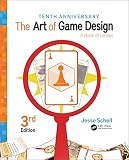
Consider The Art of Game Design by Jesse Schell. Recommended by 3 sources.
“Jesse Schell reframes game design around listening—paying attention to players, teammates, and contexts—rather than code or engine mechanics. The book supplies practical, craft-minded advice, short heuristics, and many real-world examples aimed at improving how you generate and test play ideas. Its strongest contribution is shifting how teams observe and interpret player behavior during prototyping. Annoyances: repeated examples and broad, attitude-focused guidance that won't satisfy readers seeking step-by-step production pipelines or deep technical instruction. Best read selectively around active design work.”
Similar books
The Art of Game Design
Jesse Schell
Blood, Sweat, and Pixels
Jason Schreier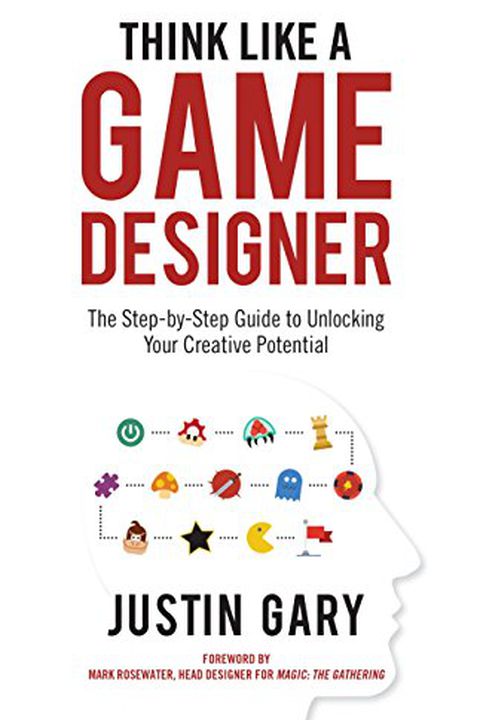
Think Like a Game Designer
Justin Gary
Eurogames
Stewart Woods
Game Mechanics
Ernest Adams
Flow
Mihaly Csikszentmihalyi
Introduction to Game Design, Prototyping, and Development
Jeremy Gibson Bond
The Game Inventor's Guidebook
Brian TinsmanHow recommendation signals are reviewed
Each recommendation is collected from a public source — interviews, articles, or curated lists — and linked to its original URL. Books with many verifiable recommendations from respected people rank higher.